
Part 1
The New Face of the World Economy for Our Next Generation
A structural look at how 197 nations evolve through the twenty-first century, as Western dominance recedes in relative weight, the Global South expands in scale, and individual prosperity follows a path very different from civilizational share by the year 2100.
What the Book Is About
By the year 2100, the balance of global power will look nothing like it does today. That is the starting point of this book. It is not a political forecast; it is a structural one, grounded in three variables that move slowly but reshape everything when compounded over eight decades: demography, institutional quality, and technological capacity.
Kindle
$6.99
Paperback
$16.99

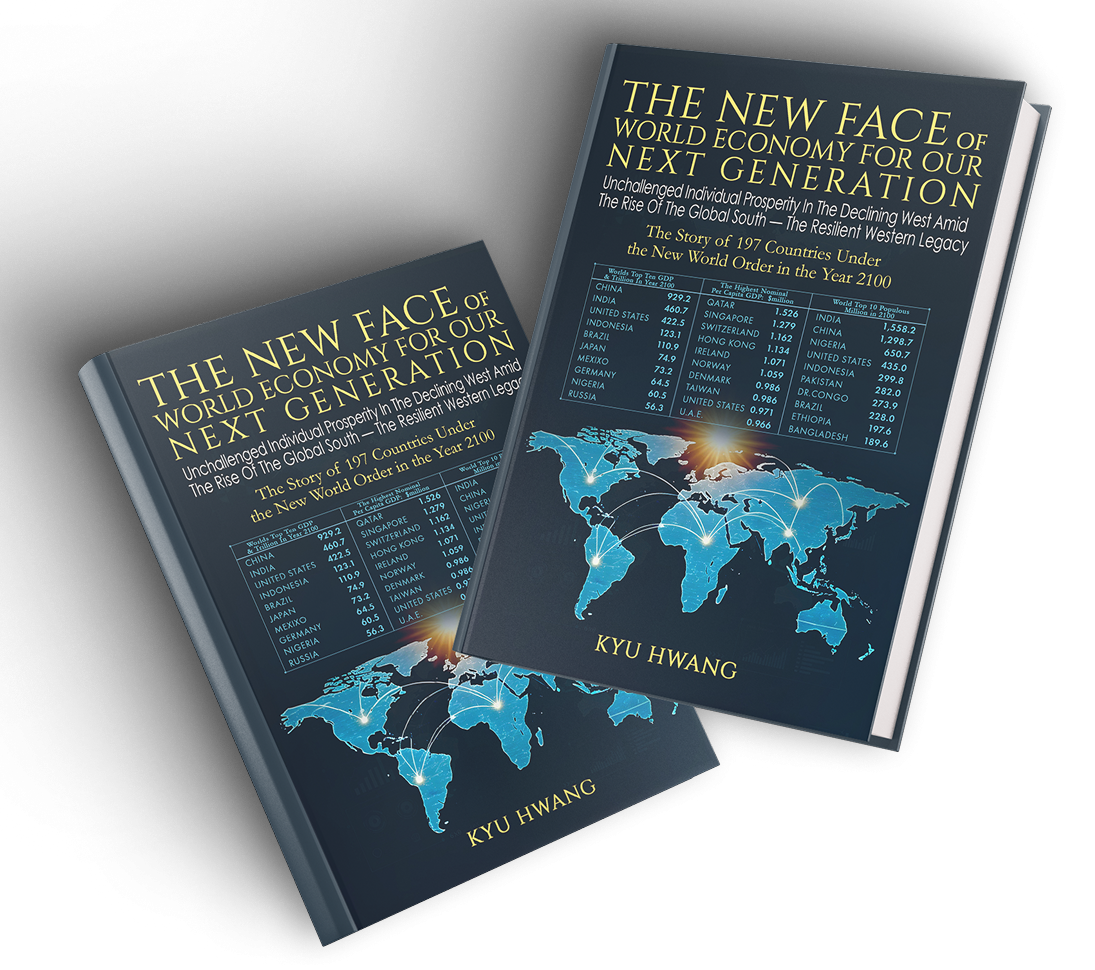
A Country-by-Country Examination of the World
The book covers all 197 sovereign nations individually. It does not treat Nigeria as a footnote to Sub-Saharan Africa or Paraguay as a rounding error in Latin America. Each country is examined on its own terms, with its own data, growth trajectory, and structural constraints and advantages.
The broader picture of a world in which China, India, and the Global South account for an increasing share of global output emerges from those individual trajectories. It is not imposed from above. It is built on the arithmetic of each country’s path.
Clarity About Uncertainty
The book is also explicit about what it cannot predict. The precise timing of China’s peak population, the pace at which African institutions strengthen, the scale of climate change disruption to coastal economies, and the diffusion of advanced technologies all introduce uncertainty.
Rather than hide those variables behind a single central projection, the book presents sensitivity analysis. It shows how different assumptions shape outcomes, allowing readers to see the range of plausible futures rather than being handed a definitive answer.